

Product Overview
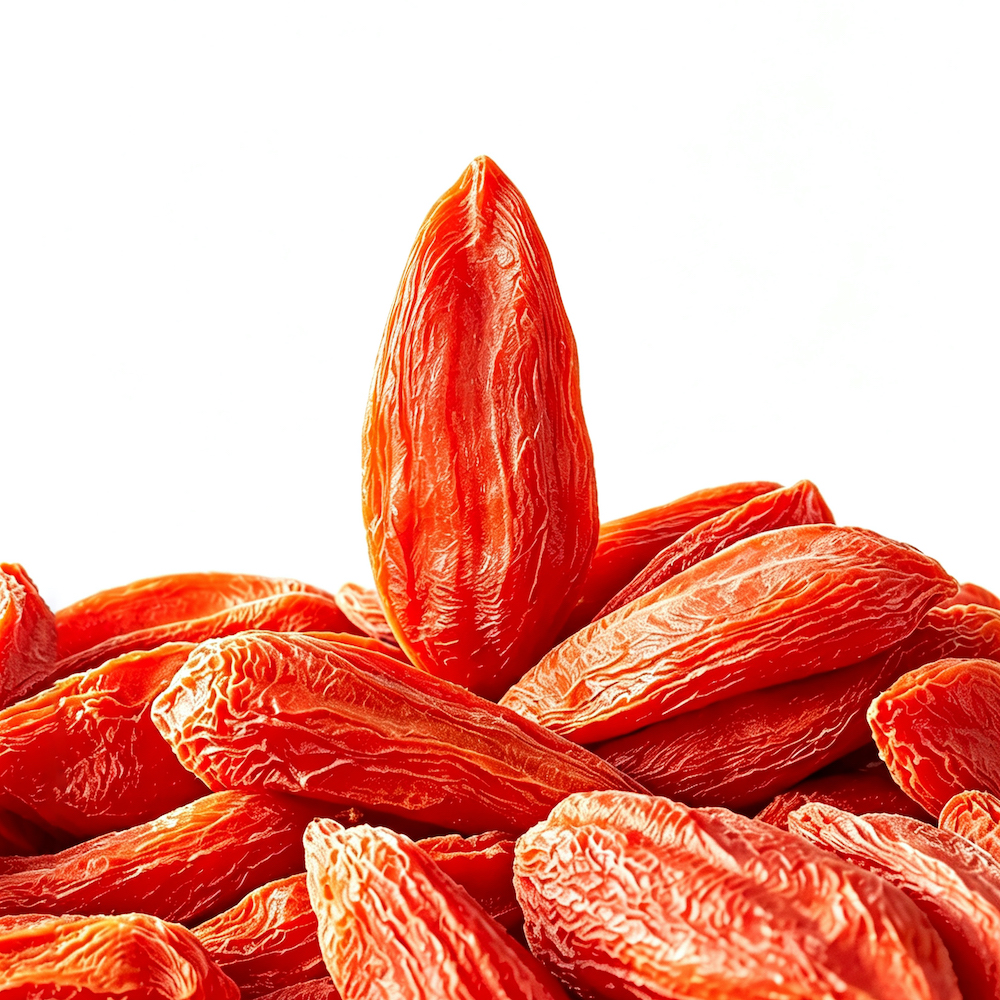
GH Dried Goji Berries (Lycium barbarum) are premium functional ingredients sourced directly from our self-owned 10,000-mu high-altitude organic plantations in the Qaidam Basin, Qinghai-Tibet Plateau (3,000m elevation). Irrigated by glacial meltwater from the Kunlun Mountains and nurtured by over 15 hours of intense sunshine with extreme day-night temperature differences, our berries naturally accumulate exceptionally high levels of Goji Berry Polysaccharides, Betaine, and Zeaxanthin. Processed via strict low-temperature drying, we offer a complete portfolio of organic and conventional size grades engineered for high-end gift packaging, tea blends, health supplements, baby foods, and industrial extractions.

Technical Specifications
| Parameter / Item | Technical Specification |
| Product Name | GH Premium Dried Goji Berries (Conventional & Organic) |
| Botanical Name | Lycium barbarum L. |
| Origin | Qaidam Basin, Qinghai Province, China (Altitude: 3,000m) |
| Processing Method | Gentle Low-Temperature Air Drying |
| Moisture Content | ≤13.0% |
| Active Bioactives | Goji Polysaccharides, Betaine, Zeaxanthin, Lutein, Natural Carotenoids |
| Organic Specs (Count/50g) | Organic 150 (≥ 2.0cm), 180, 220, 280, 380 |
| Conventional Specs (Count/50g) | Conventional 180 (≥ 1.8cm), 220, 280, 350, 800–900 |
| Quality & Safety Testing | 569-item Pesticide Residue Screening, Heavy Metals, Microbiological Testing |
| Certifications | USDA Organic, EU Organic, JAS, BRCGS, HACCP, ISO22000, HALAL, KOSHER |
| Packaging Options | 5 kg / food-grade aluminum foil bag, 2 bags in a carton, or custom bulk packaging |
Core Product Advantages
- Pure Plateau Origin:Cultivated in an unpolluted high-altitude climate with glacier irrigation, yielding bigger fruit sizes, thicker pulp, and richer active nutrient density.
- Full Chain Traceability:Vertically integrated from our 10,000-mu self-owned organic farm to final processing, ensuring stable batch-to-batch consistency and complete supply chain transparency.
- Global Compliance Ready:Every organic production lot is verified by CNAS/CMA-accredited laboratories, passing strict 569-pesticide residue screens to meet EU, US, and Japanese market standards.
- Broad Commercial Versatility:Excellent shelf stability and a wide range of size specifications suit both small-pack retail brands and high-volume industrial processors.
Suggested Applications
Key B2B Grade Selection Guide:

- Super-Large / Gift Box Grades (150–180 Count/50g):Premium berries with diameters up to ≥ 2.0 cm and defect rates <1%. Features an elegant suspension rate (>90%) in tea, making it ideal for luxury gift boxes, hotel food services, and high-end wellness formulas.
- Flagship Commercial Grades (220–280 Count/50g):Highly cost-effective with optimal rehydration rates. Perfect for herbal tea blends, mass-produced soup mixes, and maternal & infant nutritional channels. Widely exported to Japanese Kampo and EU/US organic markets.
- Industrial & Ingredient Grades (350 & 800–900 Count/50g):High-cost-performance option tailored for bakery fillings, jam manufacturing, nutrition bars, hot-pot seasonings, and large-scale botanical extractions.
Market Application Cases & Industry Trends:
- Herbal Tea Blends & Functional Drinks:Blends seamlessly into wellness fruit teas, botanical infusions, and traditional soup mixes.
- Nutraceuticals & Health Supplements:Raw feedstock for extracting high-purity goji polysaccharides, eye-health tablets, and dietary formulas.
- Bakery, Snacks & Baby Food:Used in energy bars, trail mixes, bakery fillings, and organic complementary baby foods.
FAQ
Q1: How does Conventional Low-Temperature Dried Goji Berry differ from Fresh-Locked/Freeze-Dried Goji Berry?
A1: Traditional low-temperature dried goji berries undergo slight losses of heat-sensitive Vitamin C, but offer a significantly wider range of size options, better cost-efficiency, and superior suitability for high-volume industrial processing, tea blends, and traditional gift channels.
Q2: What does the “Berry Count per 50g” mean?
A2: The grade number represents the number of dried berries per 50 grams. A lower count indicates a larger berry size (e.g., 180 count berries are larger than 280 count berries).