

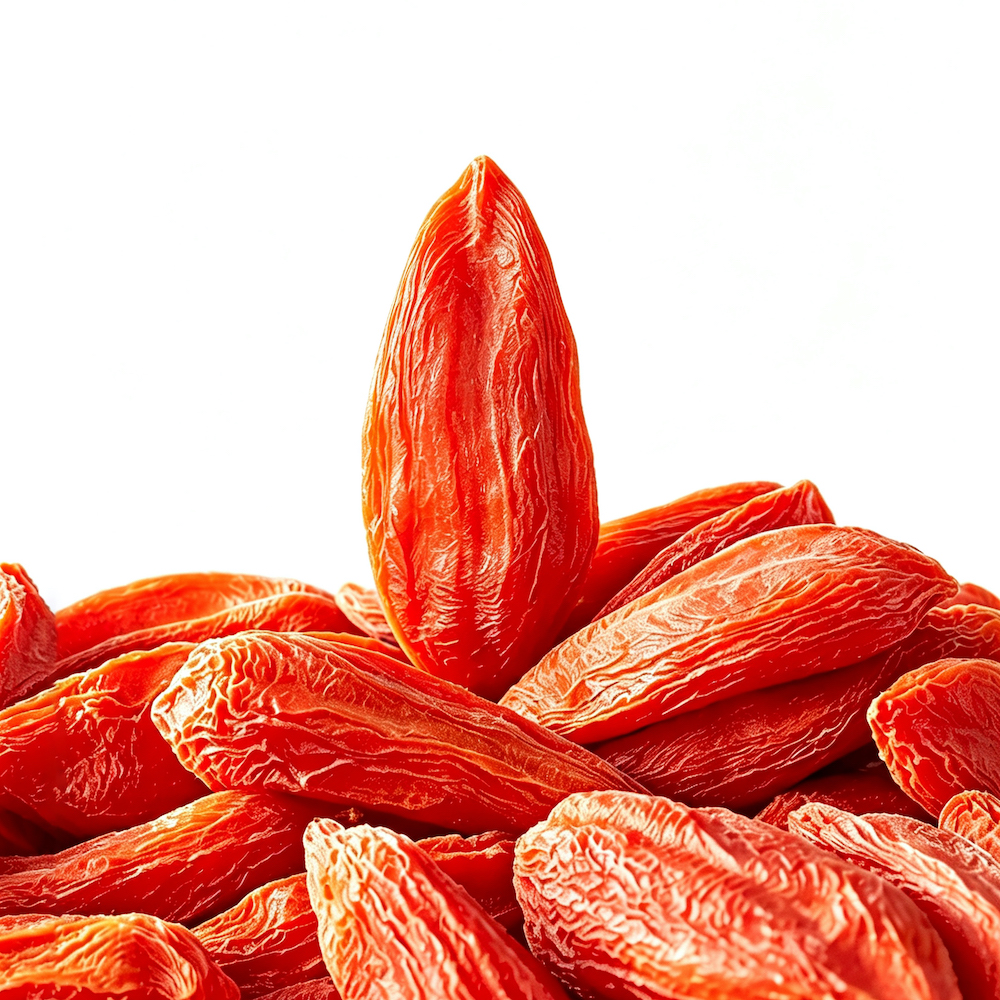

For most healthy adults, a reasonable starting portion of dried goji berries is around 15–20 grams per day, equivalent to a small handful. Studies on human nutrition have commonly investigated daily intakes of approximately 10–30 g, including a randomised study in which 20 g were consumed daily for 14 days. However, there is no universally established official recommended daily allowance for goji berries, and the appropriate amount depends on individual dietary needs, tolerance and health conditions.
Dried goji berries (Lycium barbarum) are nutrient-dense fruits containing dietary fibre, carotenoids, polysaccharides and other bioactive compounds. While they can be a nutritious addition to a balanced diet, consuming larger quantities does not necessarily provide greater health benefits and may increase the risk of digestive discomfort or interactions with certain medications.
What Is the Recommended Daily Serving of Dried Goji Berries?
Dried goji berries are often eaten as a snack, added to breakfast foods, or used in soups, teas, and other recipes. Since the drying process removes much of the fruit’s water content, the sugars, calories, and certain nutrients in dried berries are more concentrated than in fresh berries. This makes portion size an important consideration when adding them to a regular diet.
For healthy adults, a practical starting point for enjoying dried goji berries without consuming excessive amounts is 15–20 g per day. This is a general serving suggestion for food rather than a medically established dosage. Those who have never eaten goji berries before may prefer to start with a smaller portion and gradually increase it according to their tolerance.
Suggested Daily Intake by General Dietary Context
| Dietary context | Suggested approach | Practical guidance |
| Healthy adults | Around 15–20 g daily | A convenient starting portion |
| First-time consumers | Begin with 5–10 g | Observe digestive tolerance |
| People monitoring calorie intake | Measure a 10–15 g portion | Account for natural sugars and calories |
| People with sensitive digestion | Start with a small amount | Increase gradually if well tolerated |
| People taking prescription medication | Consult a healthcare professional | Check potential food–drug interactions |
| Children | Individualized portion | Consider age, dietary needs, and choking risks |
These portions are practical dietary guidelines, not formal clinical prescriptions. Dried goji berries can be consumed less frequently, and there is no nutritional requirement to eat them every day.
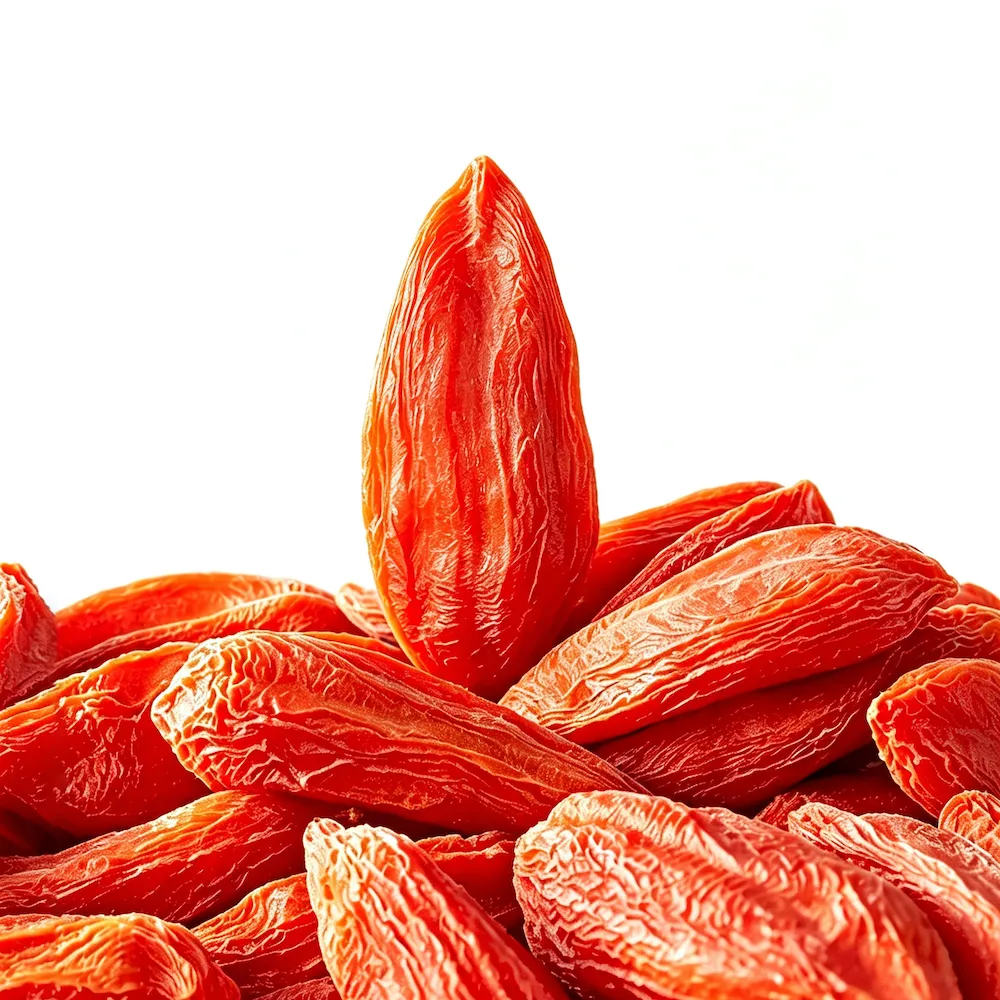
How Many Dried Goji Berries Are in 15–20 Grams?
The number of berries in a serving can vary considerably depending on the size, moisture content, variety, and processing method of the berries. Therefore, it is more reliable to weigh the fruit than to count individual berries when trying to maintain a consistent portion size.
As a rough guide, 15–20 g of dried goji berries corresponds to approximately 1–2 tablespoons, although this can vary depending on how tightly the berries are packed and their size.
How to Measure a Daily Portion?
- Use a kitchen scale: Weighing the berries provides the most consistent measurement, particularly if you consume them regularly.
- Use a tablespoon as a convenient alternative: A tablespoon can help estimate a serving when a scale is unavailable, but the actual weight may vary.
- Include goji berries in meals: Adding a measured portion to oatmeal, yogurt, or salads can make intake easier to manage than eating directly from a large package.
- Consider the rest of your diet: If you already consume dried fruit, sweetened snacks, or fruit juice throughout the day, you may prefer a smaller goji berry serving to balance overall sugar and calorie intake.
What Nutrients Do Dried Goji Berries Provide?
Dried goji berries contain a variety of nutrients and plant compounds that contribute to their nutritional value. The composition of goji berries varies according to the growing environment, variety of fruit, stage of maturity at harvest, drying conditions, and storage practices. While goji berries are often promoted as a superfood, their benefits should be considered in the context of a balanced diet rather than being exaggerated as having therapeutic effects.
Key Nutritional Components
- Carotenoids, including zeaxanthin
Goji berries contain carotenoids, particularly zeaxanthin and its esterified forms, which contribute to their characteristic orange-red color. Zeaxanthin is also found in the human retina, where it plays a role in protecting ocular tissues from oxidative stress. Goji berries can contribute dietary carotenoids, but eating them should not be regarded as a guaranteed way to prevent or treat eye disease.
- Dietary fiber
Dried goji berries contain dietary fiber, which supports normal digestive function and can contribute to satiety. Including them alongside other fiber-rich foods, such as whole grains, vegetables, legumes, and nuts, can help diversify dietary fiber sources.
- Polysaccharides
Lycium barbarum polysaccharides (LBPs) are among the most extensively studied bioactive components of goji berries. Research has investigated their antioxidant, immunological, and metabolic effects, but much of the evidence comes from laboratory and animal studies. These findings should not be interpreted as proof that ordinary dietary servings produce the same effects in humans.
- Vitamins and minerals
Dried goji berries provide varying amounts of vitamin A-related compounds, vitamin C, iron, and other minerals. Their exact nutritional profile depends on the processing method, and the contribution from a typical serving should be evaluated using the specific product’s nutrition label rather than relying on generalized superfood claims.
What Does Scientific Research Say About Daily Goji Berry Consumption?
Over the past two decades, research on goji berries has expanded to include human intervention studies, reviews, and laboratory investigations. However, the strength of the evidence varies across the claimed health benefits, and the results of studies depend on whether the researchers investigate the whole dried fruit, the juice, or concentrated extracts.
Human Studies and Dietary Intake
A randomised, double-blind study, reported in the Proceedings of the Nutrition Society in 2018, investigated the effects of consuming 20 g of dried goji berries daily for 14 days. The study compared goji berry consumption with a control dried-fruit intervention and examined the physiological, biochemical, and other outcomes in healthy participants. Due to its relatively short duration and small sample size, the findings should be interpreted cautiously rather than being used to establish a universal daily dosage.
A 2026 study published in the Journal of Dietary Supplements also investigated the consumption of goji berries in healthy individuals, using an intervention amount of 20 g per day. The authors discussed this serving size in relation to previous studies that used approximately 10–30 g per day, while acknowledging that the effects of higher intakes over the long term require further investigation.
What Can We Reasonably Conclude?
The available research suggests that moderate servings of dried goji berries can be incorporated into the diets of healthy adults. However, there is insufficient evidence to establish that consuming a particular quantity every day will reliably produce specific medical outcomes, such as improved vision, reduced cholesterol, enhanced immunity, or prevention of chronic disease.
Consumers should therefore treat goji berries as a nutritious food rather than a substitute for medical treatment, prescribed medication, or a balanced dietary pattern.
Are There Risks to Eating Too Many Dried Goji Berries?
Although dried goji berries are generally consumed as food, larger quantities may not be suitable for everyone. Their concentrated nature means that excessive consumption can increase total calorie and sugar intake, while individual sensitivities and medication interactions deserve particular attention.
Potential Concerns
- Digestive discomfort
Eating large amounts of dried fruit may cause bloating, abdominal discomfort, or loose stools in some individuals. People with sensitive digestive systems should start with small servings and assess their tolerance.
- Natural sugar and calorie intake
Drying concentrates the sugars naturally present in fruit. Although these sugars are not the same as added sugars in confectionery, portion size still matters, particularly for people monitoring carbohydrate or calorie intake.
- Allergic reactions
Food allergies to goji berries are uncommon but have been reported. People with known allergies to goji berries or related foods should avoid them unless a qualified healthcare professional has advised otherwise.
- Medication interactions
One of the most important safety considerations is the potential interaction between goji berries and warfarin, an anticoagulant. Published case reports have described elevated international normalized ratios (INR) and bleeding after goji berry consumption in people taking warfarin. The evidence is based primarily on case reports, but the potential consequences are serious enough that people taking warfarin should avoid goji products unless their prescribing clinician specifically approves them.
- Pregnancy, breastfeeding, and medical conditions
People who are pregnant, breastfeeding, taking multiple prescription medications, or managing chronic medical conditions should seek individualized advice before consuming goji berries in large quantities or as concentrated supplements. Food-level consumption and high-dose extracts are not necessarily equivalent in safety.
How to Eat Dried Goji Berries for a Balanced Diet?
Dried goji berries have a naturally sweet, slightly tangy flavor that works well in both sweet and savory dishes. Rather than consuming them in isolation, combining them with other foods can improve dietary variety and make portion control more straightforward.
Four Practical Ways to Include Goji Berries
- Add them to breakfast. Sprinkle a measured serving over oatmeal, unsweetened yogurt, or whole-grain cereal. Combining goji berries with protein and fiber-rich foods helps create a more balanced breakfast.
- Combine them with nuts and seeds. A small portion of goji berries mixed with unsalted almonds, walnuts, or pumpkin seeds creates a convenient snack. Keep the total serving moderate because nuts and dried fruits are both energy-dense.
- Incorporate them into soups and cooked dishes. Goji berries are traditionally used in Chinese soups, porridges, and other dishes. Adding a modest amount to vegetable or grain-based recipes provides flavor and dietary variety.
- Use them in salads and grain bowls. Goji berries can complement quinoa, brown rice, leafy vegetables, and homemade dressings. Their sweetness provides a contrast to savory ingredients without requiring additional sweeteners.
Dried Goji Berries vs. Other Common Dried Fruits
| Nutritional aspect | Dried goji berries | Raisins | Dried cranberries |
| Natural sweetness | Sweet with mild tang | Generally sweet | Naturally tart |
| Added sugar | Depends on formulation | Usually unnecessary | Frequently added |
| Carotenoids | Notable source of zeaxanthin | Different nutrient profile | Different nutrient profile |
| Dietary fiber | Present | Present | Present |
| Typical use | Snacks, soups, cereals, tea | Baking, snacks, cereal | Salads, snacks, baking |
| Portion consideration | Moderate serving recommended | Moderate serving recommended | Check added sugar |
No single dried fruit is universally healthier than the others. The best choice depends on nutritional preferences, ingredient composition, portion size, and the variety of foods consumed throughout the day.
How to Choose High-Quality Dried Goji Berries?
The nutritional quality of dried goji berries depends on various factors, including the fruit itself, as well as harvesting, drying, processing, packaging, and storage methods. Rather than relying exclusively on appearance or marketing claims, consumers and food manufacturers should pay attention to product quality and safety.
Important Quality Indicators
- Ingredient transparency: Look for products containing dried goji berries without unnecessary added sugar, artificial flavoring, or other ingredients that do not suit your dietary preferences.
- Consistent color and appearance: The berries should have a reasonably consistent appearance without visible mold, unusual discoloration, or excessive foreign material.
- Moisture control: Proper drying and moisture management help reduce spoilage risks and support product stability during storage.
- Food safety standards: Reputable manufacturers should maintain appropriate food safety management systems and traceability procedures, including controls for microbiological hazards and contaminants.
- Packaging integrity: Packaging should protect the fruit from moisture, oxygen, light, and contamination. Resealable packaging can be useful for maintaining quality after opening.
- Storage instructions: Follow the manufacturer’s guidance, keep the product in a cool, dry environment, and seal it properly after opening.
For commercial buyers, suppliers should be able to provide relevant specifications, nutritional information, product traceability, and applicable food safety documentation. These measures are important for maintaining consistent quality across production batches and distribution channels.
Frequently Asked Questions About Dried Goji Berries
FAQ 1: How many dried goji berries should I eat per day?
Around 15–20 g per day is a reasonable starting serving for most healthy adults. This is a practical dietary suggestion, not an official recommended daily allowance.
FAQ 2: Can I eat dried goji berries every day?
Yes, many healthy adults can enjoy moderate servings as part of a varied diet. However, daily consumption is not necessary to maintain good health, and individual dietary needs should be considered.
FAQ 3: Are dried goji berries high in sugar?
Dried goji berries contain naturally occurring sugars that become more concentrated when water is removed. Check the nutrition label and choose a moderate portion, particularly if you are monitoring carbohydrate intake.
FAQ 4: Should I soak dried goji berries before eating them?
Soaking is optional and mainly changes their texture, making them softer and easier to incorporate into recipes. Follow appropriate food hygiene practices and avoid leaving soaked berries at room temperature for extended periods.
FAQ 5: What is the best time to eat dried goji berries?
There is no scientifically established best time to consume goji berries. They can be eaten at breakfast, as a snack, or incorporated into meals according to personal preference and dietary habits.
FAQ 6: Who should avoid dried goji berries?
People taking warfarin should avoid goji berries unless their healthcare professional specifically approves their use because of reported interactions. Those with allergies, relevant medical conditions, or concerns about medication interactions should seek individualized guidance.
Conclusion
For most healthy adults, a practical and moderate serving of goji berries is 15–20 g per day, a quantity supported by the range of amounts used in human nutrition research. However, this amount should not be interpreted as a universal recommendation for achieving specific health benefits.
Dried goji berries are a good source of dietary fibre, carotenoids and other plant compounds that can contribute to a balanced diet. They are best enjoyed as part of a varied diet alongside other nutrient-rich foods such as fruits, vegetables, whole grains and nuts.
The most important considerations are portion control, individual tolerance, product quality, and medication safety. By treating dried goji berries as one component of a diverse diet rather than a concentrated remedy, consumers can enjoy their flavour and nutritional qualities practically and sustainably.