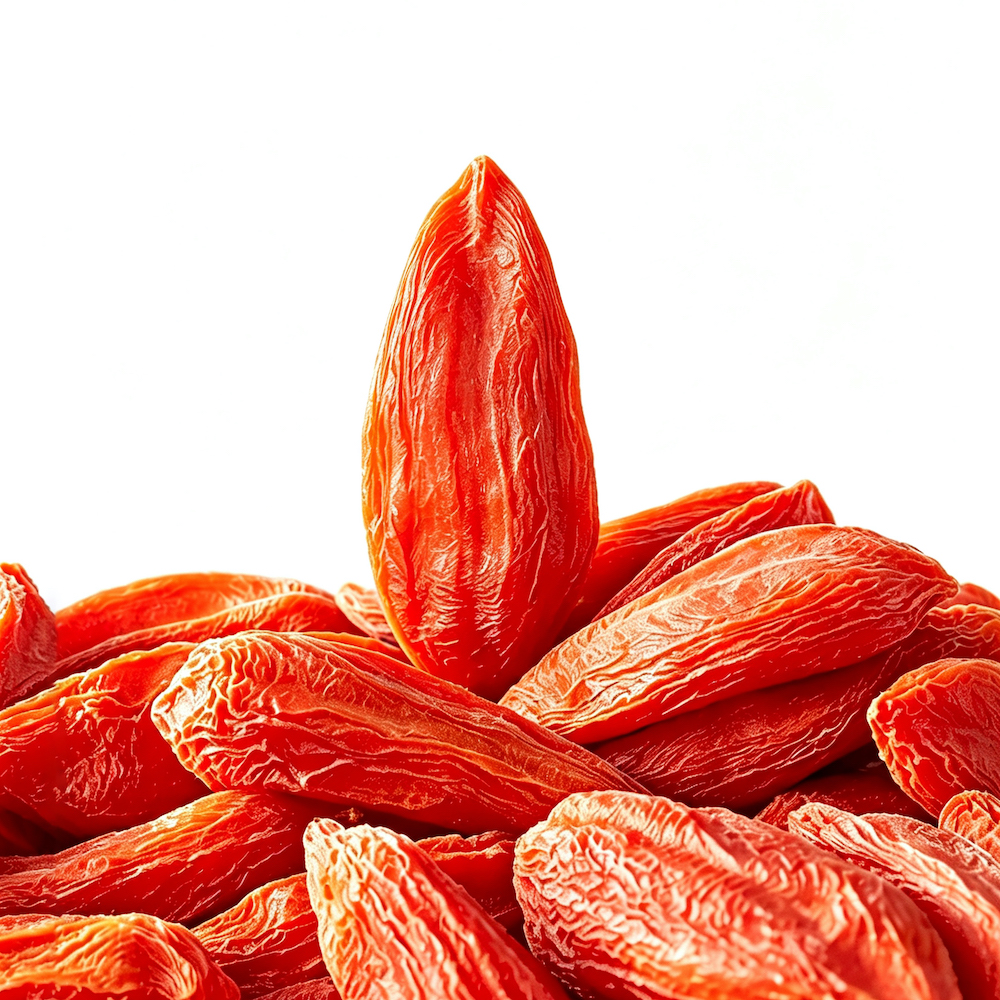

Sea buckthorn fruit oil is a lipid-rich ingredient extracted from the pulp and outer tissues of the berries of the shrub Hippophae rhamnoides, which is native to parts of the Qinghai-Tibet Plateau. In cosmetics and personal care products, it is valued for its blend of fatty acids, carotenoids, tocopherols, and other fat-soluble compounds, which may help to condition the skin and provide antioxidant protection. The exact composition varies depending on factors such as the plant variety, growing conditions, fruit maturity, extraction method, and whether the ingredient is derived from the pulp, seeds, or whole berry.
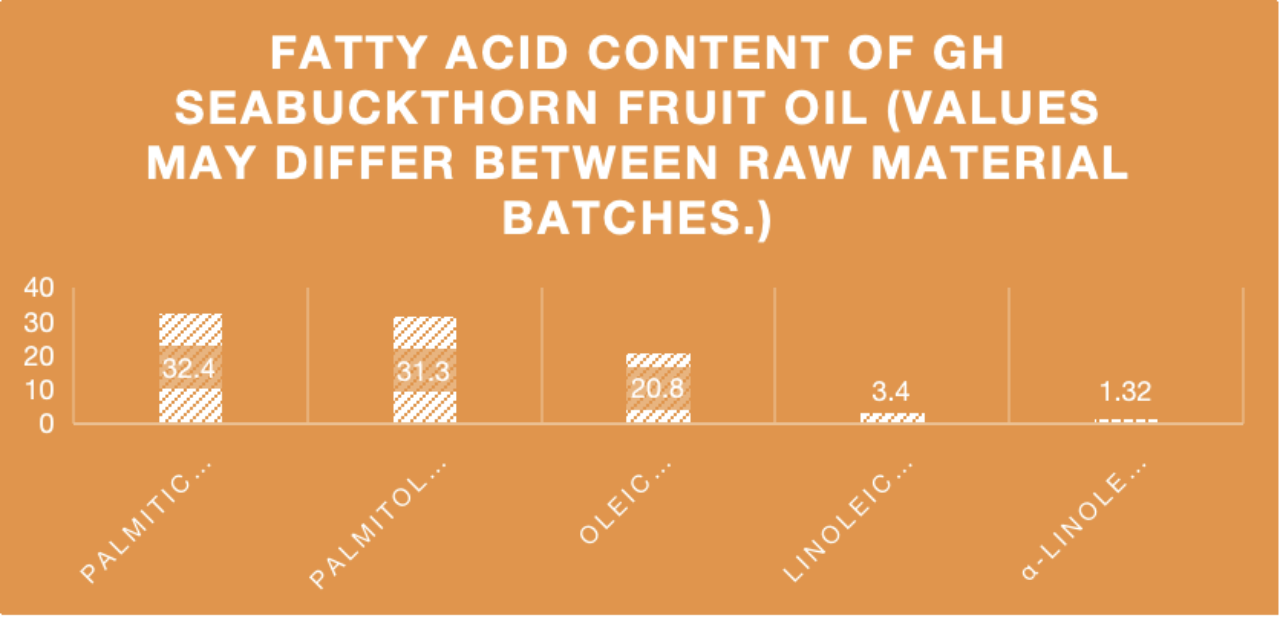
When evaluating skin benefits, one distinction matters: sea buckthorn pulp or fruit oil is not compositionally identical to sea buckthorn seed oil. Pulp oil often has a relatively high proportion of palmitoleic acid (an omega-7 fatty acid), whereas seed oil generally contains more linoleic acid and alpha-linolenic acid (both polyunsaturated fatty acids). As these profiles can vary between batches and suppliers, cosmetic formulators should request the technical specifications and fatty acid profile of the ingredient in question, rather than assuming that all sea buckthorn oils offer the same properties. A peer-reviewed review in Lipids in Health and Disease discusses these differences and their relevance to biological activity.
Sea buckthorn fruit oil is typically incorporated into facial oils, creams, balms, body lotions and other leave-on products at an appropriate level for the formula. Its strong natural orange-to-reddish colour, influenced in part by carotenoids, can affect the appearance of the finished product, while its unsaturated fatty acids mean that controlling oxidation is important. Therefore, for commercial skincare development, the ingredient should be assessed not only for its potential skin benefits, but also for colour consistency, odour, compatibility with emulsifiers, packaging requirements and shelf-life stability.
Key Skin Benefits of Sea Buckthorn Fruit Oil
- Supports skin hydration and barrier function
A healthy skin barrier limits transepidermal water loss (TEWL) and protects against external irritants. The use of oils in topical skincare products can support this barrier by softening the outer layer of the skin and reducing moisture loss. However, the outcome depends on the formulation as a whole and the condition of the user’s skin. Sea buckthorn fruit oil contains fatty acids that contribute to its emollient properties, making it a promising ingredient in products designed for dry, rough, or moisture-depleted skin.
Some encouraging, albeit limited, human research evidence exists. For example, a study of an oil-in-water emulsion containing 5% sea buckthorn extract reported improved skin hydration and reduced TEWL in a small group of healthy male participants over 84 days. However, this relates to a specific finished emulsion and cannot be extrapolated to undiluted fruit oil or other sea buckthorn oil products.
For cosmetic manufacturers, this distinction is important because the performance of a moisturiser depends on the interaction between its oils, humectants, occlusive ingredients, emulsifiers and other components. While sea buckthorn fruit oil may contribute to the emollient phase, claims about hydration should ideally be supported by testing on the finished product. Formulas intended for dry or sensitive skin should also be evaluated for irritation potential and user tolerance.
- Provides antioxidant support
Sea buckthorn fruit oil contains carotenoids and tocopherols, which are compounds associated with antioxidant activity. These antioxidants can counteract oxidative reactions in formulations and biological systems. Oxidative stress is one of the factors involved in environmental skin damage and visible skin ageing. This makes sea buckthorn oil an interesting ingredient for products designed to condition the skin and protect it against everyday environmental stressors.
However, the evidence needs careful interpretation. While laboratory studies and mechanistic research can suggest that certain compounds influence oxidative pathways, they do not automatically demonstrate that applying a cosmetic containing sea buckthorn fruit oil will prevent wrinkles, reverse sun damage or protect the skin from ultraviolet radiation. A review of sea buckthorn and skin health published in 2025 describes promising antioxidant and anti-inflammatory mechanisms, but also emphasises that clinical evidence remains limited, and that further well-controlled human studies are needed.
In product development, antioxidant ingredients can be useful for skin conditioning and formulation strategy, but the oil itself also needs protection from oxidation. Exposure to oxygen, light, heat, and unsuitable storage conditions can degrade sensitive lipids and pigments. Therefore, manufacturers should consider antioxidant systems, compatible packaging, and stability testing to preserve ingredient quality throughout the product’s intended shelf life.
- May help condition dry or uncomfortable skin
Due to its emollient lipids, sea buckthorn fruit oil may help to soften rough skin and improve the texture of dry areas when incorporated into a suitable topical formula. Its fatty acid profile is one reason why it is used in products for mature, dry, or weather-stressed skin. However, skin comfort depends on more than just the presence of a particular oil. Fragrance, surfactants, preservatives, the product’s overall lipid balance, and the condition of the user’s skin can all influence tolerance.
While some research has investigated the use of sea buckthorn in treating inflammatory skin conditions, results from extracts, seed oils, oral supplements, and experimental models should not be treated as interchangeable. A review of sea buckthorn oil research discusses its potential biological activity in relation to inflammation and skin health, and notes that additional high-quality human studies are required to clarify its effectiveness and appropriate use.
For brands formulating products for sensitive skin, the most defensible approach is to describe the oil as a skin-conditioning or emollient ingredient, unless there is stronger evidence to support a more specific claim. If a finished product is intended for eczema-prone or otherwise compromised skin, the complete formula should undergo an appropriate safety and performance assessment, rather than relying on the reputation of a botanical ingredient alone.
- Contributes to a more supple skin feel
The suppleness of the skin depends on the condition of the stratum corneum, which is the outermost layer of the epidermis, and on the way its lipids interact with water. An emollient oil can fill the gaps between dry surface cells, creating a smoother texture and improving the skin’s tactile feel. Therefore, sea buckthorn fruit oil may be useful in creams, facial oils and balms that are intended to make skin feel softer and less rough, particularly when combined with humectants and other ingredients that support the skin’s barrier function.
However, this primarily provides cosmetic conditioning benefits and does not prove that the oil rebuilds deeper skin structures or increases collagen in every user. Claims relating to elasticity, wrinkle reduction, or skin remodelling require evidence specific to the finished product and the method used to measure the outcome. Consumer perception testing and objective measurements of hydration or elasticity can help skincare brands determine whether a formula delivers benefits beyond its appealing ingredient list.
-
Offers potential support for skin appearance and healthy aging
The presence of carotenoids and other bioactive compounds in sea buckthorn has sparked research interest in oxidative stress, inflammation and skin ageing. This is because environmental exposure and the natural ageing process can influence skin texture, tone and barrier performance. In practice, a skincare product containing sea buckthorn fruit oil may be richer and more conditioning, but its effect on visible ageing depends on factors such as concentration, formulation, application frequency and the user’s overall skincare routine.
A randomised controlled trial published in the Journal of Functional Foods in 2024 investigated the effects of oral sea buckthorn oil supplementation on 40 healthy women over 12 weeks, reporting improvements in several measured skin parameters. While this provides useful evidence that sea buckthorn oil deserves further study, the trial examined oral supplementation rather than topical application of the fruit oil, and the sample size was small. Therefore, it should not be presented as proof that applying sea buckthorn fruit oil directly to the face produces the same results.
For consumers concerned about premature skin ageing, sea buckthorn oil should be considered a complementary cosmetic ingredient rather than a replacement for well-established measures such as applying broad-spectrum sunscreen daily, keeping skin adequately moisturised, and avoiding excessive ultraviolet exposure. Product claims should reflect the method of application and the quality of the available evidence for a specific formulation.
What Makes Sea Buckthorn Fruit Oil Different from Other Oils?
Sea buckthorn fruit oil stands out because it combines fatty acids and naturally occurring pigments. Compared with some common cosmetic oils, it can have a more distinctive fatty-acid profile and a more pronounced orange or reddish color. However, no single oil is ideal for every skin type or formulation: a useful comparison considers the product’s intended function, sensory properties, oxidation stability, compatibility with other ingredients, and supporting evidence.
| Ingredient characteristic | Sea buckthorn fruit/pulp oil | Sea buckthorn seed oil | Typical cosmetic relevance |
| Fatty-acid profile | Often relatively rich in palmitoleic acid (omega-7) | Generally richer in linoleic and alpha-linolenic acids | Influences emolliency, formulation design, and lipid profile |
| Natural color | Often orange to reddish because of carotenoid pigments | Usually less intensely colored, depending on processing | Affects finished-product color and packaging choices |
| Common formulation role | Emollient and skin-conditioning oil | Emollient oil with a different polyunsaturated fatty-acid profile | Selection depends on desired sensory and compositional properties |
| Main formulation concern | Color transfer and oxidation stability | Oxidation stability, particularly for polyunsaturated lipids | Requires appropriate storage and stability evaluation |
| Evidence considerations | Findings depend on the exact fruit-oil ingredient and finished formula | Research on seed oil should not automatically be attributed to fruit oil | Ingredient identity and route of use matter when supporting claims |
The table summarizes common compositional tendencies rather than guaranteed specifications. Sea buckthorn oil composition varies with cultivar, geographic origin, harvest maturity, extraction, and refining. For commercial applications, a supplier’s certificate of analysis and technical data are more useful than general claims about the species. Reviews of sea buckthorn fatty acids specifically caution that seed, pulp, and whole-fruit oils differ and that their biological effects cannot be assumed to be identical.
How to Use Sea Buckthorn Fruit Oil in a Skincare Routine?
Sea buckthorn fruit oil is usually added to finished cosmetic products or blended with other carrier oils. It should not be applied in large amounts without considering concentration and skin tolerance. Due to its strong pigmentation, using a small amount of a properly formulated product can help to reduce the risk of staining clothing, towels, or bedding. Those with sensitive skin should introduce any new product gradually and discontinue use if irritation, persistent redness or swelling develops.
A practical approach is to follow three steps:
- Choose a suitable formulation. A cream or lotion may be preferable for everyday moisturization, while a facial oil or balm may suit users who want a richer emollient finish. Check the full ingredient list, especially if the skin is sensitive to fragrance or other botanical ingredients.
- Patch-test before regular use. Apply a small amount of the product to a limited area and monitor for irritation before expanding use. A home patch test cannot rule out every allergy, but it can help identify some immediate tolerance issues.
- Use it alongside established skin protection. Apply the product according to its directions and continue using broad-spectrum sunscreen during daytime exposure. Sea buckthorn oil should not be treated as a substitute for sunscreen or a clinically indicated treatment for a skin condition.
For cosmetic manufacturers, the best application method depends on the product format. Oil-in-water emulsions may offer a lighter skin feel, while anhydrous balms and facial oils provide a richer lipid phase. In either case, formulators should assess compatibility, odor, color, oxidation, and packaging interactions through appropriate stability testing before making the product commercially available.
Safety, Side Effects, and Formulation Considerations
Although sea buckthorn fruit oil is suitable for many cosmetic formulations, its natural origin does not guarantee that it will be tolerated by every user. Some people may experience irritation or an allergic reaction to a botanical oil or another ingredient in the finished product. Those with a history of contact allergies, very sensitive skin or an active skin condition should check the full list of ingredients and consult a qualified healthcare professional when appropriate.
For product developers, quality and stability are equally important. Sea buckthorn oil contains unsaturated fatty acids that can oxidise during storage, which can potentially change the oil’s odour, colour, and quality. A robust quality control programme should consider the following factors:
- Raw-material identity: Confirm whether the material is pulp oil, seed oil, or a blend, and obtain documentation of its composition.
- Oxidation control: Evaluate appropriate storage conditions, packaging, and antioxidant strategies to help preserve oil quality.
- Color consistency: Natural carotenoid levels may vary between batches, so establish acceptable color specifications for the finished product.
- Product stability and safety: Assess the complete formulation, including preservation where required, packaging compatibility, and expected shelf life.
The scientific evidence also needs to be interpreted proportionately. Research includes laboratory experiments, animal studies, small human trials, and studies of different sea buckthorn preparations. A 2025 review highlights promising mechanisms related to skin-barrier function and inflammation but identifies the need for larger, well-controlled clinical trials. At present, sea buckthorn fruit oil is best positioned as a potentially useful cosmetic skin-conditioning ingredient, not as a proven standalone treatment for eczema, psoriasis, acne, or other dermatological diseases.
Frequently Asked Questions About Sea Buckthorn Fruit Oil
- Is sea buckthorn fruit oil good for the skin?
Sea buckthorn fruit oil contains fatty acids and antioxidant-associated compounds that make it useful for consideration in skin-conditioning formulations. The benefits of a specific product depend on its composition, formulation, and the quality of evidence supporting its claims.
- Can sea buckthorn fruit oil help dry skin?
Its emollient lipids may help soften rough skin and support a more comfortable skin feel. Products designed for dry skin may work best when the oil is combined with other moisturizing ingredients.
- Does sea buckthorn fruit oil help with wrinkles?
Its antioxidant-associated compounds have attracted research interest in skin aging, but evidence for topical fruit oil specifically remains limited. It should not be marketed as a proven wrinkle treatment without appropriate product-specific clinical evidence.
- What is the difference between sea buckthorn fruit oil and seed oil?
Fruit or pulp oil is often richer in palmitoleic acid and carotenoid pigments, while seed oil generally contains more linoleic and alpha-linolenic acids. Their composition and formulation properties differ, so they should not automatically be treated as interchangeable ingredients.
- Can sea buckthorn fruit oil be used on sensitive skin?
Some people may tolerate a well-formulated product, but botanical oils can still cause irritation or allergic reactions. Patch-test first, review the ingredient list, and seek professional advice if you have a skin condition or a history of contact allergies.
- Does sea buckthorn fruit oil protect skin from the sun?
Laboratory research has investigated antioxidant and photoprotective mechanisms associated with certain sea buckthorn compounds, but this does not establish that the oil provides reliable sun protection. Use a properly tested broad-spectrum sunscreen rather than relying on sea buckthorn oil for UV protection.
Conclusion
Sea buckthorn fruit oil is a unique cosmetic ingredient, prized for its fatty acid profile, natural pigments, and its potential to condition the skin and act as an antioxidant. While it may help to improve the feel of dry skin when used in moisturisers, facial oils and balms, the strength of the evidence varies depending on the preparation and intended benefit. Research on oral supplements, seed oil, extracts and laboratory models should not be used as direct proof of the effects of every topical fruit oil product.
The most reliable approach for skincare brands and cosmetic formulators is to verify the oil’s origin and composition, formulate products for the desired skin benefits, control oxidation and colour variation, and test finished products for safety and performance. Clear, evidence-based claims will establish sea buckthorn fruit oil as a credible ingredient choice, rather than making broad promises that exceed what current research can demonstrate.