

ملخص المقال: Both البتولا البحري and blueberries are nutrient-rich fruits. However, blueberries currently have stronger human research supporting their potential benefits for cardiovascular and cognitive health. In contrast, sea buckthorn stands out for its high vitamin C content, carotenoids, and distinctive fatty acid profile. A 2024 review in Frontiers in Nutrition summarises the growing body of evidence supporting the health benefits of blueberries, while a 2024 review in the Journal of Food Composition and Analysis highlights the diverse range of nutritional and bioactive compounds found in sea buckthorn. However, neither fruit has been proven to be universally healthier for everyone.
Sea Buckthorn vs. Blueberries: Which Is Healthier?
There is no single winner for every nutritional goal. If the priority is a fruit with a strong body of human research on vascular function and potential cognitive benefits, then blueberries are the best option. However, if the priority is vitamin C intake and a broader range of carotenoids and fruit-derived lipids, sea buckthorn is a more interesting option. Both provide plant compounds that can contribute to a varied, balanced diet, but their nutritional profiles differ significantly.
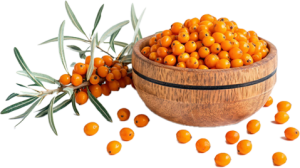
Blueberries (Vaccinium species) are renowned for their deep blue-purple hue, largely due to anthocyanins — a class of flavonoid pigments. They also provide dietary fibre, vitamin C, vitamin K, manganese, and other polyphenols. By contrast, sea buckthorn (Hippophae rhamnoides) produces small orange-yellow berries with a tart flavour. Its fruit contains vitamin C, carotenoids, flavonoids, organic acids, dietary fibre and lipids, while its pulp and seed oils have distinctive fatty acid compositions. The amount of each nutrient can vary considerably depending on the cultivar, growing conditions, ripeness and processing method.
Therefore, the most useful comparison looks beyond the label of ‘superfood’. It considers what each fruit contains, how it is typically consumed, what human studies have demonstrated, and whether the product being compared is fresh fruit, juice, purée, powder, extract, or oil. These forms are not nutritionally interchangeable. For instance, زيت بذور نبات السدر is a concentrated, fatty ingredient and is not a direct substitute for a serving of whole sea buckthorn berries.
Nutritional Comparison: Sea Buckthorn vs. Blueberries
The nutritional differences between the two fruits are most evident in their respective vitamin and phytochemical content. Sea buckthorn is notable for its vitamin C and carotenoid content, while blueberries are recognised for their anthocyanin content. Both contain polyphenols, but the types and concentrations vary. Direct numerical comparisons require careful handling because published sea buckthorn values can vary substantially depending on the cultivar and the form of the fruit used in the analysis (e.g., fresh berries, juice, dried powder, pulp or oil).
| Nutritional Feature | البتولا البحري | Blueberries |
| Main natural pigments | Carotenoids, including beta-carotene and other yellow-orange pigments | Anthocyanins, responsible for blue-purple color |
| فيتامين C | Often particularly rich; content varies widely by cultivar and processing | Provides vitamin C, generally at a lower concentration than many sea buckthorn varieties |
| Polyphenols | Flavonoids, phenolic acids, and other phenolic compounds | Anthocyanins and other flavonoids and phenolic compounds |
| Dietary fiber | Present in whole berries and pomace; retained differently in juice | Provides dietary fiber, particularly when eaten whole |
| Lipid profile | Fruit pulp and seed fractions contain oils with different fatty-acid profiles. | Very low in fat as a whole fresh fruit |
| Characteristic flavor | Tart, acidic, sometimes astringent | Sweet to mildly tart |
| Common product forms | Fresh or frozen berries, juice, puree, powder, pulp, oil, seed oil, extracts | Fresh or frozen berries, dried fruit, juice, puree, powder, extracts |
Note: This is a qualitative comparison, not a standardized nutrient analysis per 100 grams. Product form, cultivar, maturity, and analytical methods can substantially change reported values.
Sea Buckthorn: Vitamin C, Carotenoids, and Distinctive Oils
Sea buckthorn is best known for its high vitamin C content. Some varieties contain substantially more vitamin C than common fruits, although concentrations can differ between varieties and decline during storage and processing. Vitamin C contributes to normal collagen formation and supports normal immune function. It also helps protect cells from oxidative stress. Sea buckthorn also contains carotenoids, including beta-carotene, lutein and zeaxanthin, which give it its orange-yellow colour and provide provitamin A activity.
Another distinguishing feature is the lipid composition of its fruit. Sea buckthorn pulp oil and seed oil differ: pulp oil often contains palmitoleic acid, an omega-7 fatty acid, while seed oil contains substantial amounts of polyunsaturated fatty acids, including linoleic and alpha-linolenic acids. These oils are used in food, cosmetic, and nutraceutical products, but their fatty acid profiles should not be confused with the nutritional composition of whole berries. A recent review in Food Science & Nutrition emphasises that the composition of sea buckthorn depends strongly on the plant part and extraction method used.
Blueberries: Anthocyanins and Dietary Fiber
Blueberries are particularly valued for anthocyanins, water-soluble flavonoid pigments responsible for their characteristic blue and purple shades. These compounds have attracted research interest because of their potential roles in vascular function, oxidative-stress responses, inflammation-related pathways, and cognitive performance. Blueberries also provide dietary fiber, which supports normal digestion and contributes to a healthy dietary pattern. Eating the whole fruit rather than drinking a strained juice generally preserves more of the original fiber.
Blueberries are not simply an anthocyanin delivery vehicle. Their overall food matrix contains several classes of polyphenols and micronutrients, and research suggests that the combined effects of these components may be more relevant than any single compound in isolation. A 2024 review in Frontiers in Nutrition describes the current evidence across cardiovascular, metabolic, and cognitive outcomes, while also identifying areas where further human research is needed.
Potential Health Benefits of Sea Buckthorn
Sea buckthorn has attracted the attention of food scientists because it contains several nutritional components that are rarely found together in one fruit. The presence of vitamin C, carotenoids, flavonoids, and fatty acids makes it a valuable المكوّن in the development of functional foods. However, it is important to distinguish between the fruit’s nutritional composition, laboratory findings, and demonstrated health outcomes in people. The presence of a bioactive compound does not automatically mean that consuming the fruit will prevent or treat disease.
Supports Normal Immune Function
Sea buckthorn is a good source of vitamin C, which is an essential nutrient involved in normal immune system function. It also supports collagen formation and helps protect cells from oxidative damage. The amount contributed depends on the quantity of fruit consumed and how much vitamin C remains after processing. Factors such as heat exposure, oxygen exposure, storage time, and juice-processing conditions can all influence the amount of vitamin C remaining in a finished product.
Provides Carotenoids and Other Antioxidant Compounds
The orange-yellow color of sea buckthorn berries reflects the presence of carotenoids. Some carotenoids, such as beta-carotene, can be converted into vitamin A, which contributes to normal vision and immune function. Sea buckthorn also contains phenolic compounds that have demonstrated antioxidant activity in laboratory studies. These findings help explain the fruit’s interest as a functional food ingredient, although laboratory antioxidant tests should not be interpreted as proof that the fruit prevents chronic disease in humans.
Offers Potential Cardiometabolic Benefits, but Clinical Evidence Is Limited
Researchers have investigated the possible effects of sea buckthorn on blood lipids, blood glucose and blood pressure. However, the results of human studies are not consistent enough to support broad therapeutic claims. A systematic review and meta-analysis of 12 randomised controlled trials involving 901 participants, published in 2025, found no significant pooled effects on total cholesterol, LDL cholesterol, HDL cholesterol, triglycerides, systolic blood pressure or body mass index. Small changes in fasting glucose and diastolic blood pressure were reported, but the authors considered these effects to be clinically uncertain and rated the overall evidence as being of very low certainty.
This is an important distinction for consumers and food manufacturers alike. Sea buckthorn can be marketed as a nutrient-rich fruit or functional food ingredient, but the current evidence base is insufficient to support claims that it is an effective treatment for high cholesterol, diabetes, or hypertension. Further standardised trials are required to determine the most effective preparations, quantities and consumption periods.
Potential Health Benefits of Blueberries
Blueberries have been the subject of a wide range of studies on human dietary interventions, particularly about vascular function, cardiometabolic markers and cognition. The focus of this research is their anthocyanins. While results can vary depending on population, serving size, length of intervention, and product type, the body of evidence for blueberries is currently more substantial than that for sea buckthorn.
May Support Cardiovascular and Vascular Health
The effects of blueberry anthocyanins and other polyphenols on endothelial function — the ability of blood vessels to regulate their diameter and blood flow — have been investigated. A systematic review of 45 human intervention studies, published in the Journal of Nutritional Biochemistry, found evidence suggesting that consuming blueberries may improve markers of vascular function, particularly in individuals with existing cardiometabolic risk factors or health conditions. While these findings are promising, they do not prove that blueberries alone can prevent heart attacks or replace recognised cardiovascular treatments.
May Contribute to Cognitive Health
Research has also examined whether blueberry consumption can support memory and other aspects of cognitive performance. A 2021 systematic review of randomized, placebo-controlled studies on berry anthocyanins reported improvements in some memory outcomes, although results across cognitive tests were not uniform. A 2024 systematic review similarly found positive effects on verbal and working memory in some anthocyanin intervention studies, while noting inconsistencies in blood-pressure and endothelial-function findings.
These results are encouraging, especially for research into healthy aging, but they should be interpreted carefully. Studies may use blueberry powders, concentrated extracts, or anthocyanin doses that differ from an ordinary serving of fresh fruit. It is therefore not possible to promise that eating a specific amount of blueberries will improve memory or prevent cognitive decline.
Contributes Fiber to a Balanced Diet
Whole blueberries are a good source of dietary fibre, as well as containing water, vitamins and polyphenols. Fibre helps to maintain normal bowel function and contributes to a balanced diet. Opting for whole or frozen unsweetened blueberries is a sensible choice as it retains the fruit’s natural structure while avoiding the added sugars present in sweetened juices, syrups and some processed fruit products.
Which Fruit Has Stronger Scientific Evidence?
The answer depends on whether the comparison is based on nutrient content or demonstrated effects in humans. Sea buckthorn has a distinctive nutritional profile, particularly about its vitamin C, carotenoids, and oils. However, blueberries have a more extensive body of human intervention research examining vascular function and cognitive outcomes. Therefore, the two fruits should not be ranked using a single measure, such as antioxidant capacity or the concentration of one vitamin.
| Health or Research Area | البتولا البحري | Blueberries | Current Evidence Assessment |
| Vitamin C intake | Often a particularly rich source | Provides vitamin C, but usually less concentrated | Sea buckthorn has the advantage |
| Carotenoid intake | Notable source of carotenoids | Not generally recognized as a major carotenoid source | Sea buckthorn has the advantage |
| أنثوسيانين | Contains phenolic compounds, but is not typically anthocyanin-dominant | Rich in anthocyanins | Blueberries have the advantage |
| Vascular function | Human trials exist, but results are inconsistent | Multiple human intervention studies report potential benefits | More developed evidence for blueberries |
| Cognitive function | Insufficient direct human evidence for firm conclusions | Human studies and systematic reviews report some promising memory outcomes | More developed evidence for blueberries |
| Cardiometabolic markers | A 2025 meta-analysis found no consistent benefits across several major outcomes. | Human research suggests potential benefits, but findings vary by outcome | Neither should be treated as a medical intervention |
| ملف الأحماض الدهنية | Pulp and seed oils provide distinctive fatty acids | Whole berries contain very little fat | Sea buckthorn has the advantage |
The evidence distinction is important. A systematic review of sea buckthorn’s composition can establish that the fruit contains certain nutrients, but it cannot establish that eating the fruit produces a specific clinical benefit. Likewise, a blueberry trial using a concentrated powder does not necessarily predict the effect of eating a small handful of fresh berries. Strong health claims require well-designed human studies using clearly described products, doses, and outcomes.
Fresh, Frozen, Juice, or Powder: Which Form Should You Choose?
The processing method can affect the nutritional value and practical use of fruits. Whole fresh and frozen berries generally retain their fibre, whereas juices may contain less fibre if the pulp is removed. Concentrates and powders can contain more nutrients or plant compounds per gram because water has been removed; however, their composition depends on the production process. When comparing commercial products, added sugar, carrier ingredients, heat treatment, and storage conditions should also be considered.
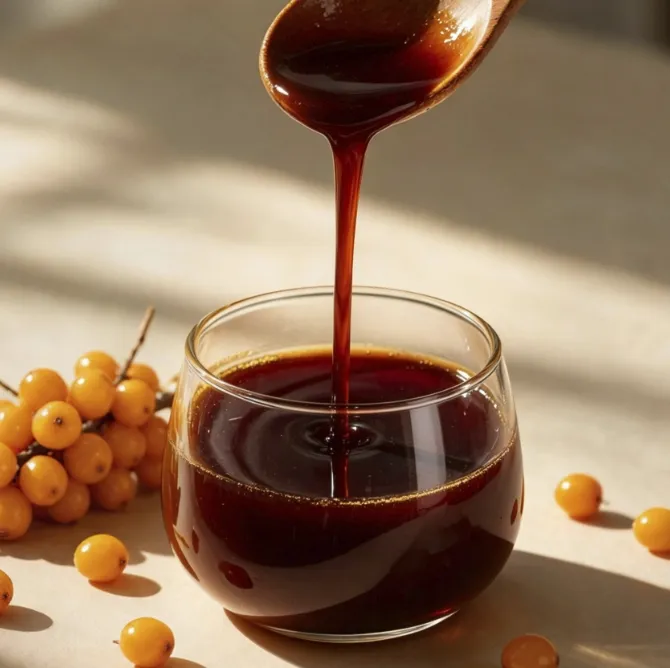
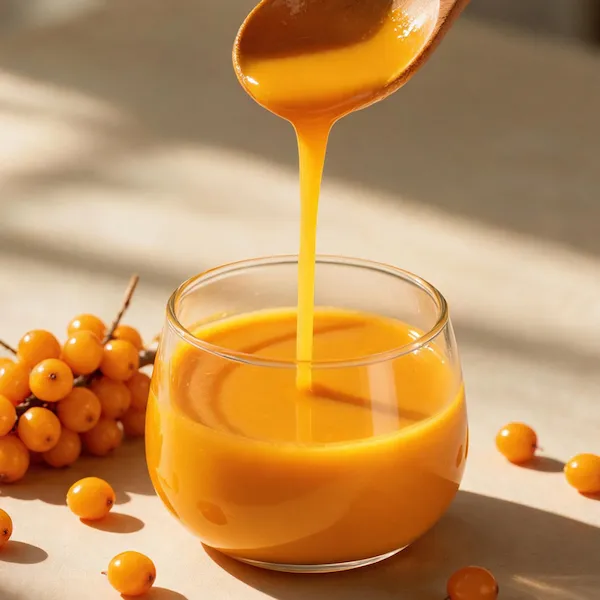
عصير شجرة السدر البحري و puree are popular because the berries are naturally tart and acidic. They can be blended with other fruit juices, added to smoothies, or used in sauces and functional beverages. Freeze-dried sea buckthorn powder is convenient for food formulation, while the pulp and seed oils are used in products where lipid-soluble components are desired. Blueberries are more commonly consumed fresh or frozen and are also used in yoghurt, cereals, bakery products, smoothies and dried fruit snacks. When the goal is to obtain the fruit’s natural nutrients without unnecessary added sugar, an unsweetened product with a clearly stated ingredient list is usually the better starting point for either fruit.
Can You Eat Sea Buckthorn and Blueberries Together?
Yes, there is no nutritional reason to choose just one of these fruits; eating both adds variety to a diet. Blueberries provide anthocyanins and dietary fibre, while sea buckthorn is a source of vitamin C, carotenoids and other plant compounds. Blending them into a smoothie, yoghurt, fruit purée or mixed-berry drink is a practical way to incorporate a variety of fruit-derived nutrients into your diet.
As sea buckthorn is naturally tart, blending it with sweeter blueberries creates a more balanced flavour. For commercial food manufacturers, this combination could also present opportunities in the form of functional beverages, fruit preparations, frozen fruit blends, nutritional powders, and dairy products. When formulating products, it is important to consider factors such as acidity, colour stability, processing temperature, and the retention of vitamin C and other sensitive compounds. The final nutritional profile should be verified through product testing rather than inferred from the raw ingredients alone.
How to Choose the Right Fruit for Your Needs?
The best option for everyday consumption is usually the fruit that best fits your dietary preferences, availability, and eating habits. Blueberries are a convenient regular snack, and there is a strong body of human research supporting their benefits for vascular and cognitive health. Sea buckthorn is worth considering if you are looking for a tart fruit ingredient with a unique vitamin C and carotenoid content, particularly in juices, purées, and blended products.
A practical approach is to consider the following:
- For anthocyanins and vascular-health research: Choose blueberries, especially whole or frozen unsweetened berries.
- For vitamin C and carotenoids: Consider sea buckthorn berries or products with clearly stated fruit content and processing information.
- For dietary fiber: Prefer whole berries over strained juice, since juicing can remove some of the fruit’s fiber.
- For functional food ingredients: Compare the actual ingredient form, concentration, processing conditions, and analytical specifications rather than relying on the fruit name alone.
- For daily dietary variety: Include both fruits if they are accessible and suitable for your taste and dietary needs.
Sea buckthorn’s acidity may cause discomfort for some people, particularly when consumed as concentrated juice. People with known food allergies or specific dietary restrictions should check product ingredients and consult a qualified healthcare professional if they are uncertain about suitability. Fruit products and supplements should not replace prescribed medication or professional medical advice.
الأسئلة الشائعة
- Is sea buckthorn healthier than blueberries?
Not in every respect. Sea buckthorn is particularly rich in vitamin C and carotenoids, while blueberries have a stronger body of human research on vascular and cognitive health.
- Does sea buckthorn contain more vitamin C than blueberries?
Many sea buckthorn varieties contain substantially more vitamin C than blueberries, although the exact amount varies by cultivar and processing method. Fresh fruit, juice, and dried products should not be compared without considering their different moisture contents.
- Are blueberries better for heart health than sea buckthorn?
Blueberries have more extensive human research examining vascular function and cardiovascular-related markers. Sea buckthorn has also been studied for cardiometabolic effects, but current clinical findings are inconsistent and do not establish a clear cardiovascular benefit.
- Can sea buckthorn help improve the immune system?
Sea buckthorn provides vitamin C, which contributes to normal immune-system function. However, eating sea buckthorn has not been proven to prevent infections or treat immune-related diseases.
- Can you eat sea buckthorn and blueberries every day?
Both fruits can be included regularly in a balanced diet if they are suitable for your individual dietary needs. Choose unsweetened whole or frozen products where possible, and be mindful of added sugar in juices and processed fruit products.
- Which is better, sea buckthorn juice or blueberry juice?
Sea buckthorn juice is notable for its vitamin C and naturally tart flavor, while blueberry juice provides anthocyanins and other polyphenols. Neither is automatically better; compare the fruit content, added sugar, processing method, and whether fiber has been retained.
Conclusion: Sea Buckthorn or Blueberries?
So, which is healthier: sea buckthorn or blueberries? While blueberries have a stronger research base in terms of potential vascular and cognitive benefits, sea buckthorn offers a distinctive combination of vitamin C, carotenoids, and fruit-derived fatty acids. Neither is universally superior; the most appropriate choice depends on nutritional goals and how the fruit is consumed.
Both can be valuable parts of a varied diet for consumers. For food manufacturers and ingredient buyers, they offer different formulation opportunities: blueberries are particularly relevant for products containing anthocyanins, while sea buckthorn is ideal for beverages high in vitamin C, ingredients containing carotenoids, fruit purées, and speciality oils. The most responsible way to communicate their benefits is to distinguish between established nutrient functions and potential health effects that still require stronger clinical evidence.